
Hurricane Nolo is moving farther west away from the Hawaiian Islands, but the storm is not disappearing from the weather picture just yet. Strong winds, large waves and lingering moisture are continuing to affect parts of Hawaii, while forecasters expect conditions to gradually improve.
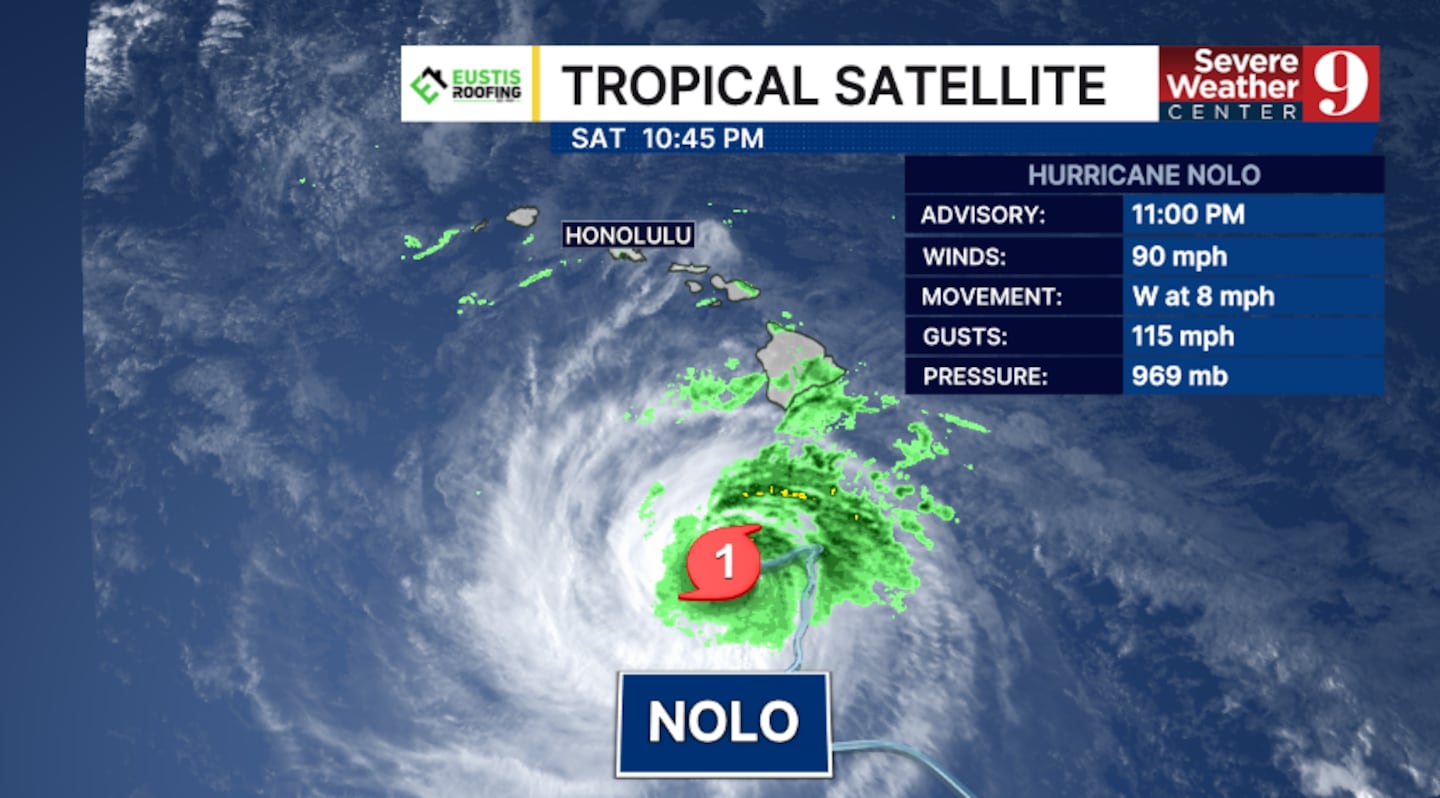
Hurricane Nolo's center has moved away from the main Hawaiian Islands, reducing the immediate threat of the storm's heaviest rainfall. But the departure does not mean conditions return to normal immediately.
The National Weather Service in Honolulu said winds were expected to diminish as Nolo moved west, while lingering moisture could contribute to additional rain later in the week. Coastal areas have also continued to deal with large surf generated by the storm.
Nolo is moving away, but Hawaii is still feeling the storm
By Sunday, Nolo was well southwest of Hawaii's southernmost point and moving away from the Big Island. The National Hurricane Center said the hurricane's movement was taking it farther from the islands, while the main flooding threat was beginning to diminish.
Even with the center of the storm pulling away, the pressure difference between Nolo and high pressure to the northeast continued to produce strong trade winds across Hawaii. The National Weather Service reported that some locations experienced wind gusts between 50 and 80 mph.
The storm's center is moving away from Hawaii, but the weather effects can continue after the center has passed. Wind, surf and leftover tropical moisture can remain important even as the main hurricane threat decreases.
Why flooding remains a concern
Nolo's slow approach gave the storm more time to produce periods of heavy rain across parts of the islands. Earlier forecasts warned of very high rainfall totals on the Big Island, with steep terrain increasing the danger of flash flooding and mudslides.
As Nolo moves farther away, the overall heavy-rain threat is decreasing. However, saturated ground and existing damage can make additional rainfall more disruptive, particularly in places that were already affected by previous storms.
A tropical system can leave behind moisture and unstable weather after its center has moved away. That means rainfall and flooding can remain part of the forecast even while the hurricane itself is heading farther into the Pacific.
Wind and surf are another part of the story
The storm also generated large waves around portions of Hawaii. The National Weather Service said southeast swell from Nolo was producing advisory-level surf along several east- and southeast-facing shores.
Some locations were dealing with breaking waves of roughly 8 to 12 feet before conditions began to ease. Strong currents and large breaking waves can remain dangerous even after a hurricane's center has moved well offshore.
Winds
Strong trade winds continued across portions of the islands as Nolo moved away. Forecasters expected those winds to gradually weaken as the pressure gradient relaxed.
Surf
Swell generated by Nolo continued to affect exposed coastlines, with conditions expected to decline as the hurricane moved farther west.
What happened during Nolo's closest approach?
Nolo strengthened into a hurricane before approaching Hawaii and later reached Category 2 intensity during its passage south of the islands. Its center remained offshore, which reduced the direct wind and storm-surge threat compared with a direct landfall.
Even without making landfall, the storm brought heavy rain, strong winds and dangerous surf. Residents and emergency crews prepared for flooding and difficult travel conditions, while some roads and areas already affected by earlier storms faced another round of bad weather.
Nolo developed into a hurricane over the Pacific and began approaching Hawaii.
The storm passed south of the main Hawaiian Islands while producing heavy rain and strong winds.
Nolo accelerated westward, reducing the main flooding threat while leaving wind and surf impacts behind.
What Hawaii can expect next
The immediate trend is toward improving conditions as Nolo continues away from the islands. The National Weather Service expects winds to diminish, although some areas can still experience showers and elevated surf.
Forecasters are also watching moisture left behind by Nolo. The Honolulu office said a more persistent rain threat could develop around Kauai during the middle of the week as trailing moisture becomes established over the island.
- Falling wind speeds across the islands
- Declining surf generated by Nolo
- Lingering tropical moisture
- Rain chances around Kauai later in the week
- Any additional flooding in already saturated areas
The bigger picture for Hawaii
Nolo arrives during a particularly active period for Hawaii's weather. The islands have already dealt with other tropical systems this season, leaving some communities and infrastructure more vulnerable to another round of heavy rain and strong winds.
That history matters because the effects of a new storm are not measured only by its maximum wind speed. Existing damage, saturated ground, road conditions and coastal exposure can all influence how disruptive the next round of weather becomes.
Frequently asked questions
Is Hurricane Nolo still near Hawaii?
Nolo is moving west away from the Hawaiian Islands. The main threat from the storm is decreasing, although some wind, surf and rain effects can continue.
Did Hurricane Nolo make landfall in Hawaii?
No. The center of Nolo remained south of the main Hawaiian Islands rather than making a direct landfall.
Can flooding continue after a hurricane moves away?
Yes. Heavy rain can continue after a storm's center passes, and saturated ground can increase the risk of flash flooding and mudslides.
What happens next with Nolo?
Nolo is expected to continue moving away from Hawaii while gradually weakening later in its forecast period. Hawaii can still experience lingering moisture and coastal effects as conditions improve.
Reporting and weather information for this article were checked against the National Hurricane Center, National Weather Service Honolulu, Associated Press and ABC News.
Post a Comment
Have something to add? Share your thoughts or let us know what you think about this story.