
The United States and China have agreed on more favorable tariff treatment for $30 billion of non-sensitive goods in each direction while opening a new channel for talks on artificial intelligence.
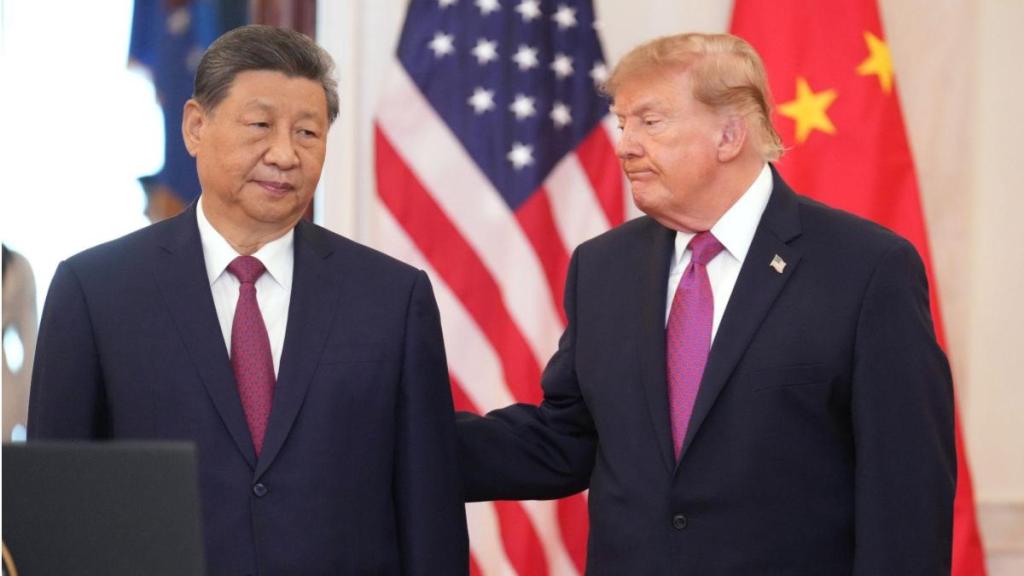
The United States and China agreed on new tariff treatment for selected goods and a formal dialogue on artificial intelligence.
A three-day visit by Chinese President Xi Jinping to Washington ended with a series of agreements covering trade, artificial intelligence and other areas of U.S.-China relations.
The most immediate economic announcement involves tariff treatment for roughly $30 billion of non-sensitive goods moving in each direction. The two governments also agreed to continue working through a new Board of Trade and to establish a formal dialogue on artificial intelligence.
- More favorable tariff treatment was agreed for $30 billion of non-sensitive goods in each direction.
- A U.S.-China Board of Trade is being used to address selected trade issues.
- The two countries agreed to establish a dialogue covering artificial intelligence risks and benefits.
- A communication channel for AI-related incidents is also planned.
What the $30 Billion Trade Arrangement Covers
The agreement does not cover every product traded between the world's two largest economies. Instead, it focuses on selected non-sensitive goods.
According to the White House, U.S. products receiving favorable tariff treatment include agricultural goods, fish and seafood, logs and wood products, cosmetics and medical devices.
Chinese products included in the arrangement include small household appliances, toys and holiday decorations, among other consumer goods.
Agricultural products, seafood, wood products, cosmetics and medical devices.
Small appliances, toys, decorations and other non-sensitive products.
Why the Trade Board Matters
The tariff arrangement is being handled through the U.S.-China Board of Trade, a government-to-government mechanism intended to address selected bilateral trade issues.
The board also launched a working group focused on market-access barriers affecting agricultural trade. That gives the two sides a formal structure for discussing individual trade problems instead of relying only on leader-level meetings.
The latest arrangement follows earlier efforts by Washington and Beijing to keep their wider trade relationship from returning to the much higher tariff levels seen during the previous trade conflict.
The new arrangement focuses on specific categories of goods rather than a broad removal of tariffs across the entire U.S.-China trading relationship.
AI Moves Into the Same Conversation
Trade was not the only major issue discussed during the Washington meetings. Artificial intelligence was also given a formal place in the relationship.
The United States and China agreed to establish a dialogue covering the risks and benefits associated with advanced artificial intelligence. The next round of discussions is expected by November.
The countries also agreed to create a communication channel for AI-related incidents. The purpose is to provide a way for officials to communicate when an AI-related event raises serious concerns.
The planned mechanism is intended to give U.S. and Chinese officials a direct channel for discussing serious AI-related incidents.
Trade and Technology Are Becoming Increasingly Connected
The latest agreements show how closely trade and technology now overlap in the U.S.-China relationship.
Both countries are major players in artificial intelligence, advanced computing and other technologies that have economic and national-security implications. At the same time, Washington and Beijing continue to restrict or scrutinize certain technologies and companies.
That means the new agreements do not remove the broader competition between the two economies. Instead, they create additional channels for managing specific areas of disagreement.
What Happens Next
The immediate focus will be on how the tariff recommendations are implemented and which products receive the agreed treatment.
The new trade board will continue working on market-access issues, while the AI dialogue is expected to move forward later this year.
The two countries have also agreed to continue work on other parts of their economic relationship. The latest announcements therefore represent a series of targeted arrangements rather than a single comprehensive trade agreement.
U.S. and Chinese leaders meet during Xi Jinping's September state visit.
The two countries agree on more favorable treatment for selected non-sensitive goods.
A formal channel is established for discussions about AI risks and benefits.
Officials will work on implementation and continue discussions in the coming months.
What This Means for the U.S. Economy
For American businesses, the practical impact will depend on which products receive the more favorable tariff treatment and how quickly the arrangements are implemented.
Agricultural exporters, manufacturers and companies involved in consumer goods will be among the businesses watching the next steps closely.
For consumers, the effect will also depend on the specific products affected and whether lower trade costs eventually pass through supply chains into prices.
Frequently Asked Questions
What did the U.S. and China agree to?
The two countries agreed on more favorable tariff treatment for $30 billion of non-sensitive goods in each direction and agreed to continue working through a bilateral trade mechanism.
Which U.S. products are included?
The White House listed agricultural goods, fish and seafood, logs and wood products, cosmetics and medical devices among the U.S. exports covered by the arrangement.
Did the U.S. and China reach a full trade agreement?
No. The latest arrangement concerns selected goods and specific trade issues. It does not remove all tariffs or resolve every disagreement between the two countries.
What was agreed on artificial intelligence?
The two countries agreed to establish a dialogue on AI risks and benefits and create a communication channel for AI-related incidents.
When will the AI talks continue?
The countries said the next round of AI discussions is expected by November.
Reporting and official information reviewed from Reuters, The Associated Press and the White House.
Post a Comment
Have something to add? Share your thoughts or let us know what you think about this story.